 Image: 60 Minutes America's real job-creators...who can't afford to create any jobs. |
Rich people create jobs.
Specifically, entrepreneurs, when incented by low taxes, build companies and create millions of jobs.
And these entrepreneurs, therefore, the theory goes, can solve our nation's huge unemployment problem--if only we cut taxes and regulations so they can be incented to build companies and create jobs.
In other words, by even considering raising taxes on "the 1%," this job-creation theory goes, we are considering destroying the very mechanism that makes our economy the strongest and biggest in the world: The incentive for entrepreneurs to start companies in the hope of getting rich and, in the process, creating millions of jobs.
Now, there have long been many absurd holes in this theory, starting with
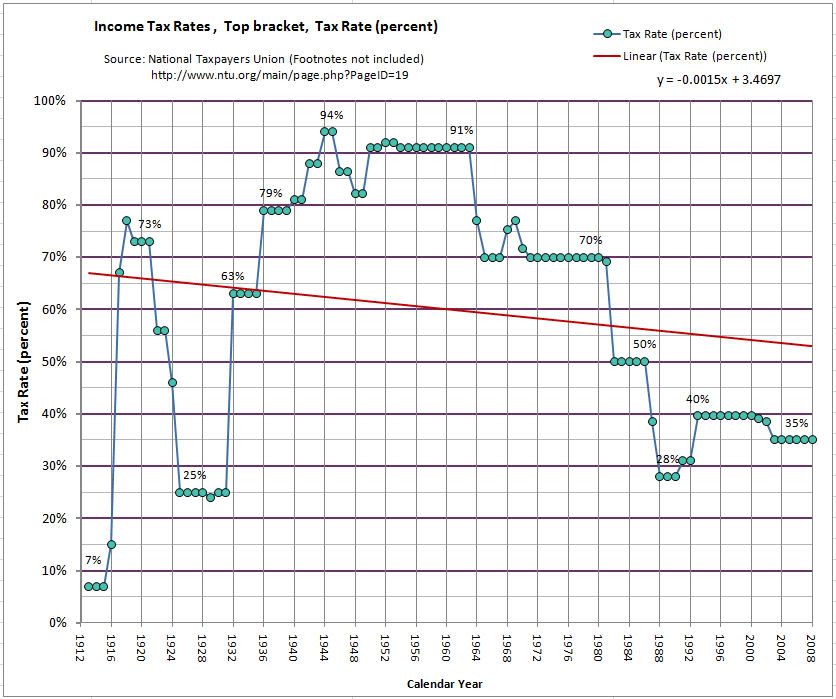
- Taxes on rich people (capital gains and income) are, relative to history, low, so raising them would only begin to bring them back in line with prior prosperous periods, and
- Dozens of rich entrepreneurs have already gone on record confirming that a modest hike in capital gains and income taxes would not have the slightest impact on their desire to create companies and jobs, given that tax rates are historically low.
But now a super-rich and super-successful American has explained the most important reason the theory is absurd, while calling for higher taxes on himself and people like him.
The most important reason the theory that "rich people create jobs" is absurd, argues Nick Hanauer, the founder of online advertising company aQuantive, which Microsoft bought for $6.4 billion, is that rich people do not create jobs, even if they found and build companies that eventually employ thousands of people.

What creates the jobs, Hanauer astutely observes, is the company's customers.
The company's customers create demand for the company's products, which, in turn, creates the need for the employees to produce, sell, and service those products. If those customers go broke, the demand for the company's products will collapse. And the jobs will disappear.
Now, of course entrepreneurs are an important part of the company-creation process. And so are investors, who risk capital in the hope of earning returns. But, ultimately, whether a new company continues growing and creates permanent jobs is a function of the demand for the company's products, not the entrepreneur or the investor capital. Suggesting that "rich entrepreneurs" create jobs, therefore, Hanauer observes, is like suggesting that squirrels create evolution.
So, then, if what creates the jobs in our economy is "customers," who are these customers? And what can government policy do to make sure these customers have more money to spend to create demand and, thus, jobs?
The customers of most companies, Hanauer points out, are ultimately the gigantic middle class--the hundreds of millions of Americans who currently take home a much smaller share of the national income than they did 30 years ago, before tax policy aimed at helping rich people get richer created an extreme of income and wealth inequality not seen since the 1920s.
 She'd like to create jobs. But she can't afford to anymore. Click to see how extreme inequality has gotten. |
But, wait, aren't the huge pots of gold taken home by "the 1%" supposed to "trickle down" to the middle class and thus benefit everyone? Isn't that the way it's supposed to work?
Yes, that's the way it's supposed to work.
Unfortunately, that's not the way it actually works.
And Hanauer explains why.
Hanauer takes home more than $10 million a year of income. On this income, he says, he pays an 11% tax rate.
With the more than $9 million a year Hanauer keeps, he buys lots of stuff. But he doesn't buy as much stuff as would be bought if that $9 million were instead earned by 9,000 Americans each taking home an extra $1,000 a year.
Why not?
Because, despite Hanauer's impressive lifestyle--his family owns a plane--most of the $9+ million just goes straight into the bank (where it either sits and earns interest or gets invested in companies that ultimately need strong demand to sell products and create jobs).
If that $9+ million had gone to 9,000 families instead of Hanauer, it would almost certainly have been pumped right back into the economy via consumption (i.e., demand). And, in so doing, it would have created more jobs.
Hanauer estimates that, if most American families were taking home the same share of the national income that they were taking home 30 years ago, every family would have another $10,000 of disposable income to spend.
That, Hanauer points out, would have a huge impact on demand--and, thereby job creation.
It's time we stopped mouthing the fiction that "rich people create jobs."
Rich people don't create jobs.
Our economy creates jobs.
And until we return to more reasonable tax policies that help the 99% instead of just the 1%, our economy is going to go nowhere.
没有评论:
发表评论